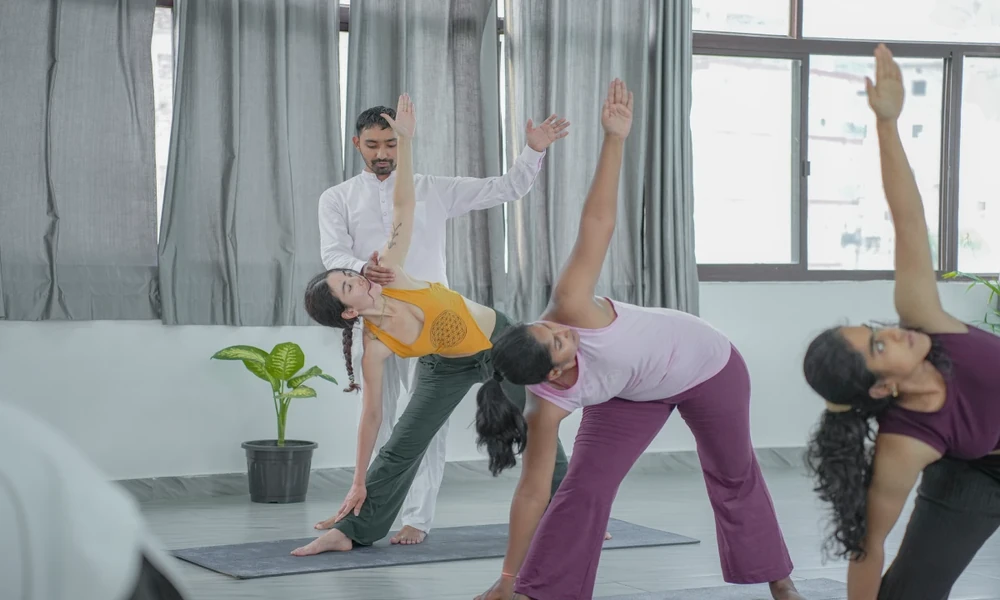
Students arrive at Yoga Teacher Training In Thailand from different starting points and with different reasons for being there. Some have practised for years and want a formal structure around existing knowledge. Others are newer to yoga and have decided that immersive training is the most direct route to a teaching qualification. Programs on Koh Phangan draw students from Europe, North America, Australia, and Southeast Asia. Age, occupation, and prior experience vary across any cohort, and programs are built to accommodate that range rather than work from a single assumed profile.
Practitioners deepening their practice
Practitioners with years of regular yoga behind them arrive wanting the mechanics of postures and the principles connecting poses, not more mat time. Teacher training gives them structural knowledge that years of personal practice alone do not build. Many have no plan to teach professionally. They enrol because the format develops personal practice in a way that independent study does not match. By graduation, most find that working through the teaching curriculum changes how they practice, even if they never lead a paid class. Existing body awareness speeds progress through the technical curriculum. Anatomy content that takes weeks to absorb from a book moves faster when a practitioner already knows what postures feel like from the inside. Philosophy and sequencing modules register differently for someone with years of mat experience compared to someone building that reference from the start.
People leaving other careers
Career changers make up a significant share of each cohort. Yoga teaching can be structured independently, relocated across countries, and built around other commitments, which draws people looking to leave fixed office work.
- Yoga teaching can be relocated without losing professional standing.
- Retreat settings and wellness centres offer work structures outside office environments.
- Koh Phangan programs draw career changers because the location creates a clean break from previous routines.
Some arrive having already looked into studio employment, retreat work, and online teaching as income options. Others use the training period to decide whether teaching is the direction they want at all. Removing the daily environment tied to a previous career makes sustained reflection easier across the full training duration, which is part of why residential programs in Koh Phangan attract this group.
Age range on the mat
Cohorts include students from their mid-twenties to their late fifties, with no separation by age within the program. Mixed-age groups produce more varied feedback in peer observation sessions than groups drawn from a narrow range.
- Younger trainees arrive with athletic backgrounds and move through the physical curriculum at a pace.
- Older trainees bring patience through the slower sections and draw on life experience during the teaching practicum.
- Students across age groups regularly name cohort diversity as one of the more useful parts of the experience.
Programs apply the same curriculum and assessment criteria to all students regardless of age. Peer observation sessions with mixed-age groups consistently produce more specific and varied feedback than sessions where participants share a narrow background and experience range.
Enrollment draws practitioners, career changers, and relative beginners. Programs built to work across varied experience levels produce cohorts where the range of backgrounds raises the quality of learning for every student in the group.